
Little Warriors (Ages 5–6)

Our Little Warriors program introduces children ages 5–6 to traditional Shotokan karate through engaging, structured instruction. Students learn fundamental karate techniques while developing coordination, focus, confidence, and self-discipline.
Each 45-minute class combines age-appropriate challenges, movement exercises, and traditional karate training to help children become more independent, follow instructions, and take pride in their progress.
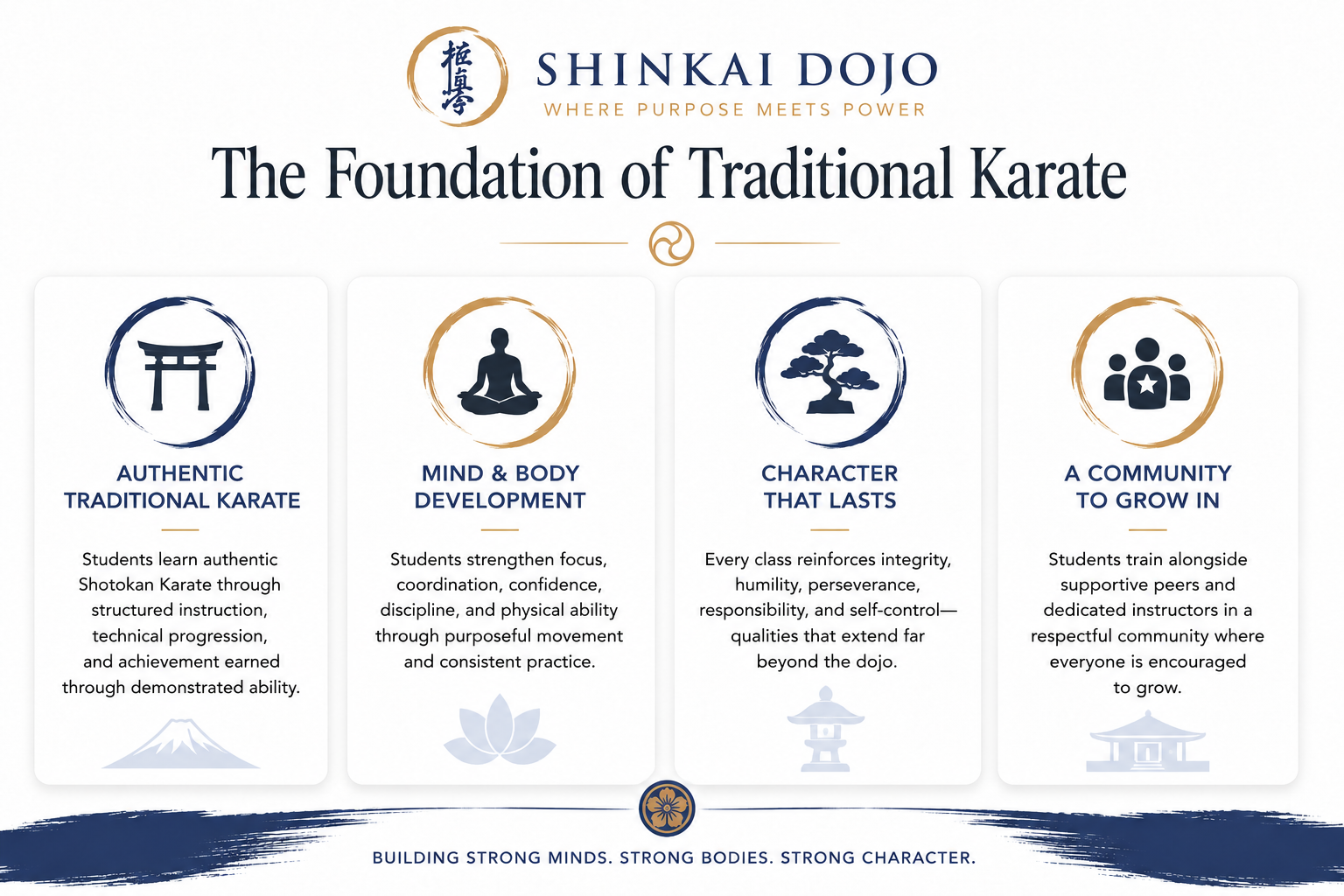
Why Parents Choose Traditional Karate
Every class develops technical skill, confidence, and character through authentic Shotokan Karate instruction.
Real Traditional Karate

Students learn authentic Shotokan Karate through structured instruction, technical fundamentals, and a clear path of progression. Every class builds real skill, discipline, and confidence one step at a time.

Leadership & Respect
Confidence Through Achievement
Traditional karate teaches students to lead by example, support one another, and show respect through their actions. Older students mentor younger students, creating a culture of encouragement, humility, and responsibility.
Confidence isn't given—it's earned. As students master new techniques, reach goals, and overcome challenges, they develop belief in themselves that extends far beyond the dojo.
Begin Their Karate Journey

Confidence isn't built by watching. It's built by training. Join us for a 2-Class Trial and experience traditional Shotokan Karate in a welcoming, structured environment.